We bring the solar technology. Communities bring the knowledge
That combination is why our infrastructure keeps running where others don't. Every phase always involves the community.
Our Approach
Building infrastructure that lasts isn't just engineering. It's listening, co-designing, co-funding, and handing over, so the community owns the result as much as we do.

Community Co-Ownership
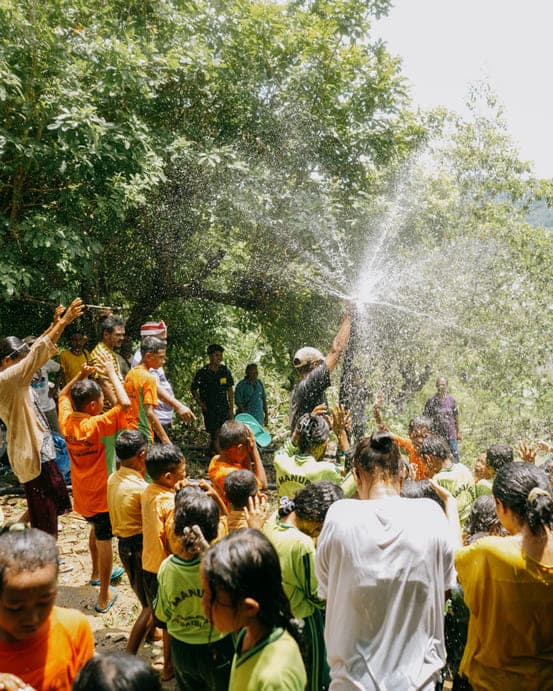
Every phase is built with the community, from walking the land together to forming the Water Committee that governs the system permanently.

Community Financing
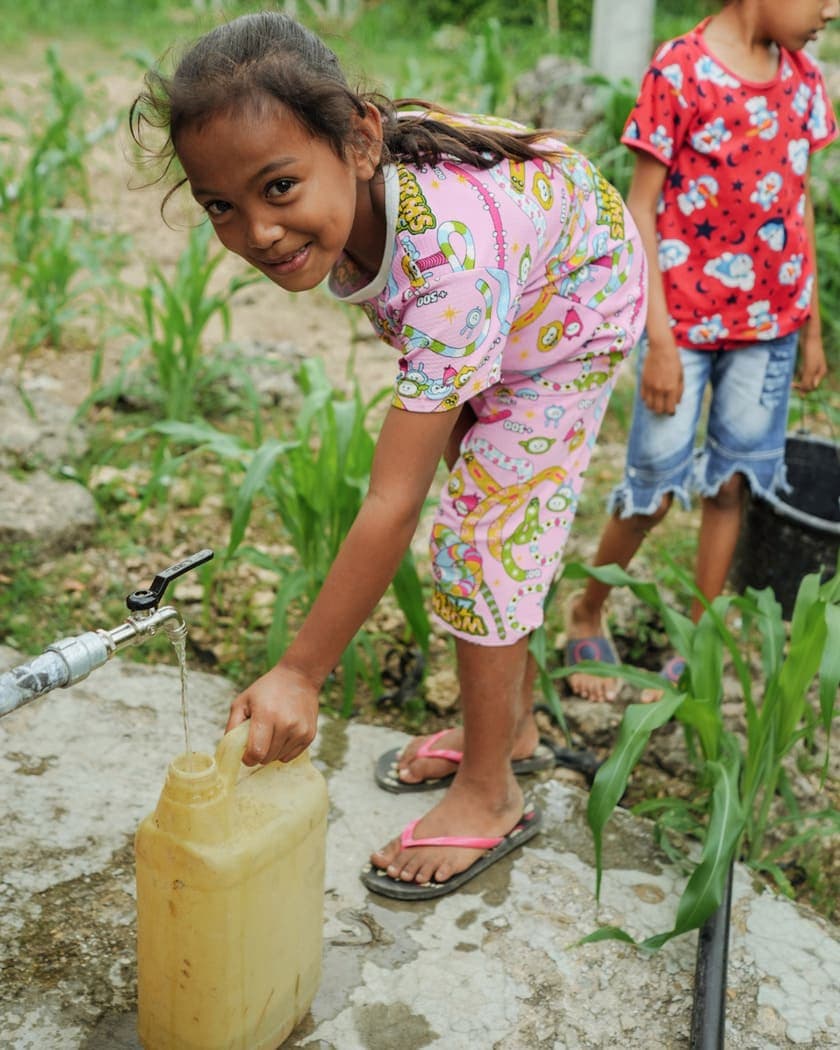
Communities co-fund up to 50% of project costs. After installation, a small monthly fee managed by the Water Committee keeps the system running without external dependency.

Monitoring & Continuity
Water IQ monitors every system in real time. Our team and Water Committee conduct regular field visits to catch issues early. Every two years, a full quality control review ensures nothing is missed.

Learning & Local Capacity
Solar Champions, local women and men trained by us, operate and maintain the system independently. When we leave, the knowledge stays.
What is our process?
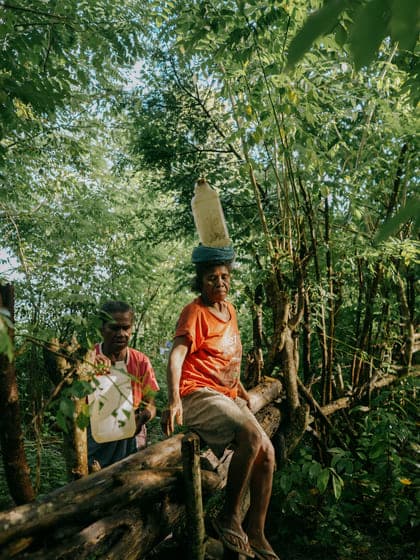
Survey water conditions on-site with the community using mengalir.co data.
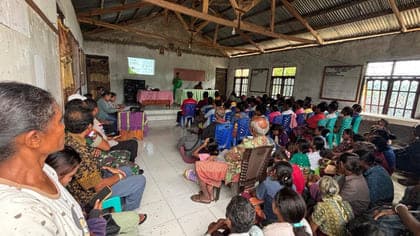
Calculate the design and budget together, making sure the solution fits community needs.
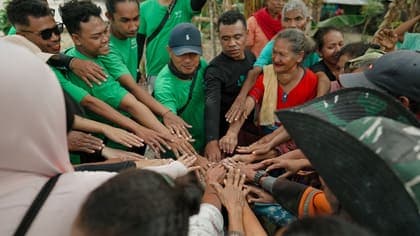
4 sessions to listen, decide, and sign the MoU together before anything is built.
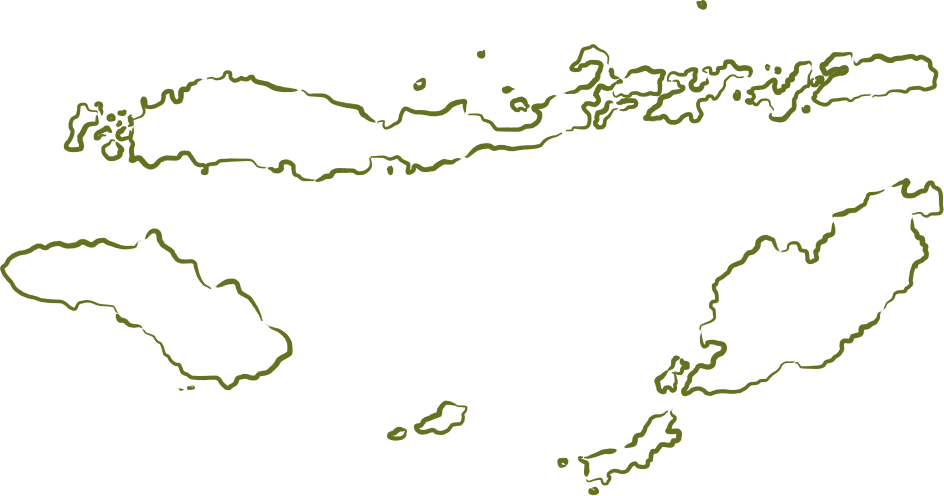
These villages are our partners
Malaka
Timor Tengah Utara
Sumba Barat
Sumba Tengah
Manggarai Barat
Sumba Barat Daya
Questions we hear most often.
We assess communities based on water need, accessibility, community readiness, and local government support. Each village goes through a participatory assessment where they co-design the solution and commit to contributing labor and a maintenance fund.
Start by contacting our partnerships team. We'll match you with a community, co-design the project scope and budget, and keep you involved at every milestone.
Costs vary by village size, terrain, and system complexity. On average, a complete village water system costs between $15,000-$25,000, including solar panels, pumps, pipes, and community training.
Every community establishes a water committee and a small maintenance fund before construction begins. We provide spare parts, remote monitoring technology, and follow-up visits. Our 2-year post-installation impact report tracks system performance and community outcomes.
You can recommend a village through our Report a Village page. We'll review the submission and reach out to the community for assessment.
You can be a collaborator for the next village!
16 new villages are planned for 2026. Each one is waiting for a partner who believes the collaboration works.